|
 |
 |

What is psychotherapy? Initially, over a hundred years ago, a new way of non-medical treatment arose to help people suffering from 'nervous disorders.' Over the decades the scope and the approaches have changed. Various gurus of therapy have come and gone and each has left an idea, an approach, interventions, some research, and so on. At the same time the range of problems treated has expanded. People often struggle for personal goals of relief from pain, anxiety, depression, indecision, obsession, performance limitations, and maladaptive memories and habits. Similarly, people often struggle to resolve conflicts within their marriage, family, and with workplace partners. In each case, they attempt to find a creative and pleasurable adjustment to experiences with themselves, others, or the object a spiritual journey. When they have exhausted the ideas or resources of their own problem-solving efforts they seek aid. It is often the case that their own, so called, problem-solving methods have simply made their situations or problems that much worse. It is hard to see the picture when you are inside the frame. The aid they seeks can be from loved ones, friends, clergy, physicians, or psychotherapists. There are several features common to most professional approaches of psychotherapy. These essential elements include:
1) customarily therapy is done in face-to-face settings with verbal and non-verbal interaction between the persons involved
The applied psychology is usually called brief therapy, psychiatry, psychotherapy, group therapy, family therapy, cognitive therapy, behavior therapy, or so on, denoting a major aspect of an approach or the modality in which it is conducted.
People seeking therapy should only consult state licensed mental health professionals who will, therefore, hold the requisite academic degree (M.D., Ph.D., M.S.W., M.A., M.S.S.W., Psy.D.), and background in clinical training, and supervision requirement to practice. After reading this introduction, you may wish to read the longer essay at the bottom of this page.
Lankton's Approach
Prior to the graduate work and postgraduate therapy training I spend my
undergraduate days studying mathematics, and engineering
until finally majoring in four subject: history, linguistics, anthropology, and
psychology. This (hard) scientific background has profoundly rooted me in the
pragmatics, epistemology, and phenomenology of how change occurs, how I know
it, and how it is experienced by others. My post-grad study was strongly influenced by personal contact and study
with Milton Erickson and other therapy leaders I worked with mentioned elsewhere
on this web site.
My approach is strongly influenced by my five years of personal
study with Dr. Erickson. However, and my previous 4 post-grad years of training
in Gestalt Therapy and Transactional Analysis. In addition, my classical clinical social work training,
psychodrama training, bioenergetics, and behavior modification training, and early
work to help develop clinical patterns for neuro-linguistic programming have provided an
additional range of understanding.
I teach and practice a positive psychotherapy. I believe that, therapy is more than techniques and more than remedial. Therapy can represent and embrace an emerging epistemology and new attitude in social science. That is, therapy should emphasize a goal-oriented, brief, and non-pathological approach. It must be goal-oriented, future-oriented, participatory, health-discovering, and co-creating of the experiences and resources needed to make truly creative responses to demands which gave rise to symptoms or problems. Therapists are primarily experts for co-creating a context for change, that is co-creating process and the reassociation of experience that produces creative growth or "cure." My clinical work is in the contexts of individual psychotherapy, clinical hypnosis, and couples or marital therapy. Of course I have published and taught internationally in each of these areas for 3 decades.
|
|
|
|
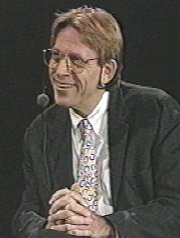
Stephen on co-creating experience. |
|
|
• Goal-Oriented Brief Couples (and Individual) Therapy A description of Goal-Oriented
Therapy |
|
A method for resolving the
critical moments of trauma.
| |
Summarizing my goal-oriented approach, in a nutshell is easy. This introduction is followed by a link to a more in-depth 12-page discussion at the bottom of this page. There are two major orientations to couples (and individual) therapy: one deals with resolving the negative patterns acquired during premarital developmental stages, and the other ignores these limitations, instead working to strengthen positive experiences and communications between the couples. The former approach is built on conventional psychodynamic therapy (using the past) and the latter is an off-shoot of a systems approach that has come to be referred to as �positive-psychotherapy� (using the future).
The emphasis of brief marital therapy, or individual therapy, is on rapidly removing blocks to positive experience and emotional satisfaction, and establishing the foundations of, improved communication that leads to empathic skills, active listening, and intimacy while heightening awareness for, and experiences of, bonds each partner can have for the other. That is why I have called the approach goal-oriented brief therapy and tools of positive psychotherapy � to distinguish it from the approach knows as solution-focused, Ericksonian, or psychodynamic therapy.
The first essential part of the treatment is the assessment phase. The most crucial variable is the determination of whether or not the maladaptive communication between the couple is a result of poor habits in previous modeling or the result of pre-existing proclivities for defensive behavior on the part of one or both spouses. If it is the latter, therapists may help solve the attitudinal and experiential inhibitions that give rise to the defensiveness � even if its origin lies outside of, and existed prior to the partnership.
It is most important for the seasoned clinician to recognize that a deficiency in positive communication and listening/empathy skills may indicate that there are emotional conflicts and historical biases or habits in perceptions, thinking, and feeling. These deficiencies work to prohibit the retrieval of desired behaviors, experiences, and skills needed to improve the marriage or quality of life. Goal-oriented brief positive therapy with couples need not polarize to one or the other of the approaches mentioned above, but can be accomplished by integrating the two with the strongest emphasis always resting upon a desire to establish the positive experiences and skills in listening, respecting, reinforcing, and communicating goals in the shortest possible time. The remainder of this entire article can be read by clicking on this link:
Goal-Oriented Brief Positive Therapy by Stephen Lankton